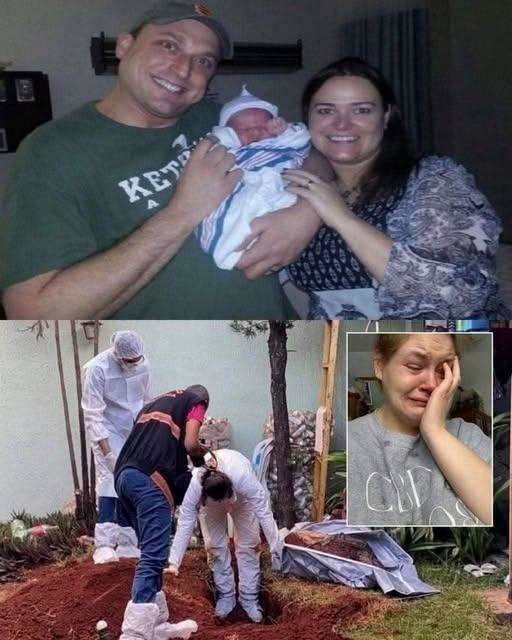
Mark and Sarah had spent a long time preparing to welcome a child into their home. They arranged the room, completed the required process, and imagined the first quiet evening after finally bringing their adopted son home. The placement represented hope, commitment, and the beginning of the family life they had waited to share.
Within hours, that expectation changed. According to the account, a scream broke through the house and the evening descended into confusion. Neighbors saw flashing emergency lights on the street and began asking what had happened. The adoption agency offered no immediate public explanation, while the couple struggled to understand behavior for which they felt unprepared.
The boy had arrived with a small suitcase, but he also carried a history that could not be unpacked as easily. Mark and Sarah reportedly realized that important parts of his past had not been fully explained to them. The distress they witnessed was not something that affection, a decorated bedroom, or reassurance could resolve in one night.
By morning, the couple’s lives looked very different. They were exhausted, frightened, and uncertain about what the next day would bring. Their hopes for a joyful beginning had not vanished, but those hopes now existed beside the reality that their son needed specialized help.
The account describes them seeking urgent assistance from therapists, their agency, friends, and other trusted people. That decision was important because severe trauma-related behavior is not something adoptive parents should be expected to manage without professional support. Asking for help did not mean they had failed the child. It meant they recognized the limits of what love alone could accomplish.
Adoption is often described publicly as a rescue story with a simple happy ending. A child needs a home, caring adults open their door, and the family is assumed to become whole. That version may be emotionally appealing, but it can ignore the experiences a child had before placement.
Children who have lived through instability, neglect, loss, abuse, repeated moves, or broken attachments may react in ways that seem confusing or extreme. A safe house does not instantly make the nervous system feel safe. The child may remain prepared for danger even when no immediate threat exists.
This can appear as anger, withdrawal, panic, sleep problems, testing boundaries, destroying objects, or rejecting the very adults trying to provide care. Such behavior is not proof that the child is bad or incapable of forming a family bond. It can be an expression of fear and a survival response learned long before the adoption.
Adoptive parents therefore need honest information before placement whenever it is legally and ethically possible to provide it. They need training that goes beyond paperwork and basic parenting instruction. Trauma-informed preparation can help them interpret difficult behavior without treating every crisis as deliberate defiance.
Agencies also have an ongoing responsibility. Support should not end when a placement is finalized or when the child crosses the threshold of the new home. Families may need therapy, respite services, crisis assistance, medical care, school coordination, and contact with other adoptive parents who understand the experience.
Mark and Sarah’s reported first night became a warning because it exposed the gap between expectation and reality. They had prepared to welcome a son, but they had not fully understood the intensity of the wounds he carried. The problem was not a shortage of love. It was a shortage of information, preparation, and immediate support.
Their experience also shows why adoptive parents should not be shamed for admitting fear or exhaustion. Silence can place both the child and parents in greater danger. Speaking honestly allows professionals to evaluate the situation and create a plan that protects everyone.
Healing after trauma rarely follows a straight line. Trust can take months or years. Progress may appear in small changes rather than dramatic breakthroughs. A child may need repeated proof that caregivers will remain present even during difficult moments.
The unexpected turn in the couple’s story did not necessarily mark the end of their family. It marked the end of the fantasy that adoption would erase the past. Their son’s history entered the home with him, and becoming his parents meant learning how to face that history together.
Adoption can create loving, lasting families, but it should never be presented as a simple rescue narrative. It is a commitment to a real child rather than an imagined one. The most responsible response combines compassion with preparation, honesty, and professional support. That is how hope becomes durable enough to survive the difficult first night and the many days that follow.