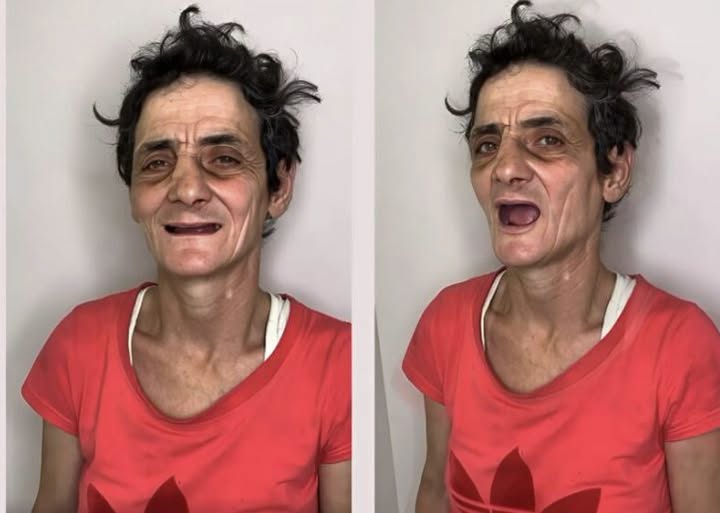
For years, Rita’s life had been reduced to survival. She lived on the street, collected bottles to earn enough for simple meals, and endured cold nights with little protection. The loss of her son had pushed her deeper into grief and isolation. As time passed, strangers stopped seeing a woman with a history and began seeing only her worn clothing and neglected appearance. Employers judged her before she could explain herself, making it almost impossible to find a route back into ordinary life.
The cycle was cruel. Without work, Rita could not afford stable housing, dental treatment, grooming, or clothing suitable for an interview. Without those things, people were less willing to offer her work. Her appearance became evidence against her even though it reflected hardship rather than laziness. Every rejection reinforced the message that she no longer belonged in the world moving around her.
That pattern changed when makeup artist Shafag Novruz noticed Rita and chose not to walk past. The meeting was not important because a famous stylist offered cosmetics. It mattered because one person looked directly at someone who had become socially invisible. Shafag asked about Rita’s life and listened. She then arranged a transformation intended to restore confidence, treating the process as an act of dignity rather than entertainment.
The care went beyond makeup. Rita received dental help, which addressed one of the most visible signs of years without access to regular treatment. Her hands and feet were cleaned and cared for with manicures and pedicures. Unwanted hair was removed gently, and her skin was prepared before cosmetics were applied. Each step communicated that her comfort mattered and that she deserved the kind of attention usually reserved for paying clients.
Her hair was washed, lightened, cut, and styled. New clothing completed the outward change, but the most striking difference appeared in Rita’s posture and expression. At first, she seemed uncertain about the person emerging in the mirror. Gradually, her shoulders lifted and her face softened. The transformation did not create a different woman. It uncovered the person hardship had hidden from both the public and, perhaps, from Rita herself.
Before-and-after images can easily turn such stories into spectacle, as though a person’s value begins only when she conforms to conventional standards of beauty. That would miss the point. Rita had dignity before the first brush touched her face. What she lacked was access, safety, and the social permission to be seen. Shafag’s work became meaningful because it was paired with respect and practical care rather than the suggestion that homelessness was merely a cosmetic problem.
A makeover cannot solve grief, housing insecurity, poverty, or the barriers that keep people out of employment. Rita would still need lasting support and opportunities after the photographs were taken. Yet confidence can be an important starting point. Being treated with patience may help someone imagine attending an interview, reconnecting with others, or accepting assistance. The experience showed Rita that her situation did not have to define every future day.
The story’s strongest lesson is not that a stylist made a homeless woman beautiful. Rita was always a full human being worthy of attention. The lesson is that sustained hardship can make society look away, while one deliberate act of recognition can interrupt that erasure. Shafag could not restore everything Rita had lost, but she gave time, skill, and care without demanding that Rita prove she deserved them. In the mirror, Rita saw more than new hair and makeup. She saw evidence that someone believed she was still worth investing in—and that belief helped her begin to believe it too.